



Dog Crates and Playpens
Choosing the right Recovery Crates And Playpens for your dog after a Spinal Stroke
A note about our site:
Where possible, FCEtalk uses minimal images for easier printing
helping you create clear, practical reference guides to support your pet’s recovery journey.
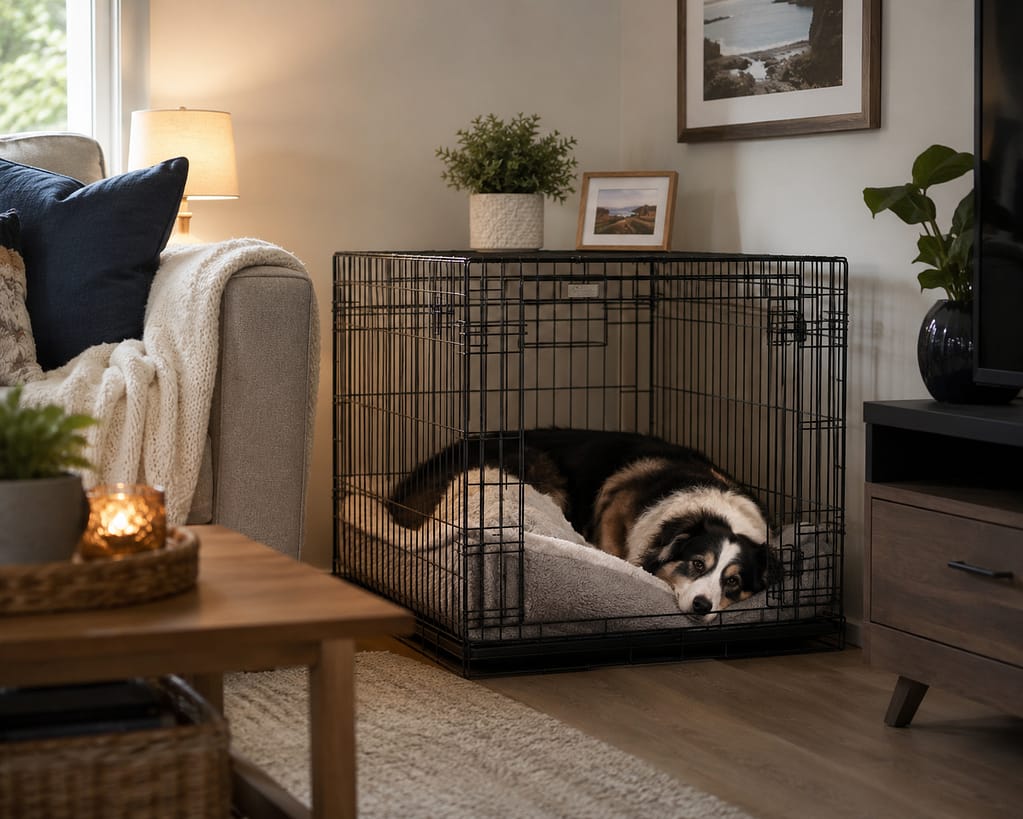
Recovery Crates And Playpens
When your dog comes home after a fibrocartilaginous embolism (FCE), often called a spinal stroke, creating a safe recovery area can make everyday care feel more manageable.
Your dog may be unable to stand, unsteady on their feet or affected more severely on one side. Even when they are eager to move, weakness and poor coordination can increase the risk of slipping, falling or becoming exhausted. A carefully prepared crate or playpen can provide protection while keeping food, water, bedding and essential care items close at hand.
However, FCE recovery is different from recovery after spinal surgery or some cases of intervertebral disc disease (IVDD). Strict crate rest is not automatically required after FCE. Once your veterinarian has ruled out conditions that require immobilisation, appropriately supported movement and rehabilitation may form an important part of recovery.
A crate or playpen should therefore be viewed as a safe recovery base—not a place where your dog is unnecessarily confined for long periods.
Why a Safe Recovery Area Matters After FCE
FCE occurs when material believed to originate from an intervertebral disc blocks a blood vessel supplying part of the spinal cord. The resulting loss of blood flow can cause sudden weakness, poor coordination or paralysis.
The severity varies considerably. One dog may walk with a mild wobble, while another may be unable to stand or reposition themselves without assistance. FCE also commonly affects one side of the body more severely than the other.
A well-designed recovery area can help you:
- Prevent falls and uncontrolled movement
- Keep your dog away from stairs and slippery floors
- Provide comfortable, supportive bedding
- Make toileting and bladder care easier to manage
- Monitor your dog’s movement, appetite and comfort
- Create a calm environment for rest
- Support safe, veterinarian-approved rehabilitation
- Reduce pressure on weaker or paralysed limbs
The aim is not simply to restrict your dog. It is to create an environment where they can rest safely while still receiving the movement, repositioning, affection and rehabilitation their recovery plan requires.
Recovery Crates After FCE
A recovery crate provides a smaller, more contained resting area. It may be particularly useful during the first few days at home, overnight or whenever you cannot directly supervise your dog.
Preventing Falls and Further Injury
Following an FCE, your dog may try to stand before they have regained sufficient strength or coordination. Their legs may cross, buckle or slide away beneath them. Some dogs repeatedly attempt to get up when they hear a familiar sound or see a family member.
A correctly sized crate can prevent your dog from wandering onto slippery flooring, attempting stairs or falling against furniture. It can also protect them from other pets or young children while they are resting.
FCE does not usually create an unstable spinal injury, so the crate is generally being used to manage the environment rather than to hold the spine completely still. Follow your veterinarian’s instructions if another condition has not yet been excluded or your dog has additional injuries.
Supporting Rest Without Preventing Recovery
Rest is important, especially after the stress of hospitalisation and during the early adjustment to being home. However, prolonged confinement without repositioning or appropriate activity can contribute to stiffness, muscle loss, boredom and pressure sores.
Dogs that cannot reposition themselves should be turned regularly according to veterinary instructions and kept on thick, clean, dry bedding. Dogs unable to walk may require intensive nursing support, while assisted movement and rehabilitation are often encouraged when considered safe. VCA Animal Hospitals
Your veterinarian or canine rehabilitation professional can advise you about:
- How frequently your dog should change position
- When supported standing or walking should begin
- How long your dog can remain in one position
- Whether passive range-of-motion exercises are appropriate
- How often your dog should be taken outside
- Which movements should temporarily be avoided
Creating a Calm Recovery Base
A crate can become a familiar retreat where your dog knows they are safe. Position it where your dog can remain connected to family life without being surrounded by constant activity.
Many dogs settle more easily when they can see and hear their family. Complete isolation may increase distress, particularly for a dog that has suddenly lost their independence.
Keep the space peaceful, but spend time sitting beside your dog, speaking calmly and offering gentle reassurance.
Choosing the Right Recovery Crate
Size
Your dog should have enough room to:
- Lie fully on either side
- Stretch their legs comfortably
- Lift their head without obstruction
- Change position safely, if physically able
- Accommodate supportive bedding
A crate that is too small can make repositioning difficult and increase pressure on the body. A very large crate, however, may allow an unsteady dog to gain momentum before falling.
For dogs that cannot move independently, you also need sufficient room to assist with turning, cleaning and bedding changes. A crate with a wide door or removable top may make hands-on care easier.
Entry and Accessibility
A low threshold is particularly helpful after FCE. Your dog should not have to step over a high frame when their paw placement or balance is impaired.
Consider whether the opening is wide enough for:
- A full-body support harness
- A rear support sling
- Two-person assistance
- Safe lifting without twisting
- Emergency access if your dog becomes distressed
For large dogs, a playpen or gated recovery area may be easier to access than a conventional crate.
Material and Construction
Wire crates offer good airflow and visibility, but weak paws or limbs can become caught between bars. Cover exposed edges and ensure your dog cannot push a foot through an unsafe gap.
Plastic crates can feel sheltered and secure, although they may provide less access for lifting and repositioning. Furniture-style crates can blend into the home, but appearance should come after accessibility, ventilation and structural safety.
Whatever style you choose, check that it has:
- Secure latches
- Smooth, rounded edges
- Adequate ventilation
- A stable, non-slip base
- No gaps that could trap a paw or limb
- Enough strength for your dog’s weight and behaviour
Soft-sided crates are usually unsuitable for dogs that push against the walls, need substantial physical assistance or may become trapped in flexible fabric.
Why Choose a Furniture-Style Dog Crate?
For many families, a traditional wire crate works perfectly well. However, large black wire crates can dominate a room and often feel out of place in modern homes.
Furniture-style dog crates solve this problem by disguising your dog’s crate as a stylish piece of furniture. Instead of looking like a kennel, they resemble side tables, entertainment units or decorative cabinets.
Many owners also find these crates encourage the whole family to leave the crate in place permanently rather than packing it away after use. This consistency helps dogs develop positive associations with their own quiet space.
Some of the benefits include:
- Better integration into your home’s décor
- Creates a cosy, den-like environment
- Can double as functional furniture
- Often more attractive for living rooms and bedrooms
- Available in multiple finishes to suit your interior style
Before choosing one for FCE recovery, look beyond its appearance. Some furniture-style models have narrow doors, raised thresholds or limited ventilation. Others may not provide enough access for you to support or reposition a large dog. They are generally better suited to dogs who can enter, turn and lie down with minimal assistance. For a dog with significant paralysis, an open playpen or accessible floor-level recovery zone will often be more practical.
Always confirm current dimensions, door height, weight limits and accessibility before purchasing. A model that works well as an everyday crate may not necessarily suit a dog requiring hands-on FCE care.
Best Furniture-Style Dog Crates in 2026
| Category | Winner |
|---|---|
| 🏆 Best Overall | Hzuaneri Wooden Dog Crate Furniture |
| 🏡 Best for Small Spaces | XXYSPT Corner Dog Crate Furniture |
| 📦 Best Storage | Koreal Dog Crate with Drawers |
| 💪 Strongest Construction | Costway Heavy Duty Dog Crate Furniture |
| 🛏️ Most Comfortable | NORVA Wooden Dog Crate Furniture |
Playpens for Dogs Recovering From FCE
A playpen provides more room than a crate while still creating a controlled environment. For many dogs recovering from FCE, it offers a helpful balance between safety and carefully managed freedom.
Space for Supported Movement
As your dog begins rehabilitation, they may need room for supported standing, weight shifting or a few carefully controlled steps. A playpen can provide enough space for this without giving them unrestricted access to the house.
Any exercise should follow your dog’s individual rehabilitation plan. More movement is not always better; quality, support and fatigue management matter.
Easier Hands-On Care
An open-topped playpen can make it easier to:
- Assist your dog into a standing position
- Apply or remove a support harness
- Change bedding
- Inspect the skin
- Clean toileting accidents
- Help your dog change position
- Perform approved rehabilitation exercises
For a large or non-ambulatory dog, choose a pen with a gate wide enough for you to enter. Repeatedly bending over the sides can place considerable strain on your own back.
Connection With the Family
A playpen can be set up in a living room or another shared area, allowing your dog to remain part of family life. This can provide reassurance and mental stimulation without exposing them to unsafe movement around the house.
The pen should still include a quiet resting area. Your dog needs uninterrupted sleep as well as companionship.
Choosing the Best Playpen for FCE Recovery
Stability
Dogs with poor balance may lean or fall against the panels. Choose a pen that will not slide, tip or collapse under your dog’s weight.
Make sure the pen you chose cannot move across the floor when your dog pushes against it.
For larger dogs, look for:
- Heavy-duty panels
- Secure panel connections
- Stable floor anchors where appropriate
- Reliable door latches
- A design that cannot fold unexpectedly
Panel Spacing
Check every gap carefully. A weak leg, paw, toenail or support harness can become caught between widely spaced bars. The safest panel spacing depends on your dog’s size, but openings should be narrow enough to prevent limbs or the head from passing through.
Shape and Size
A pen should provide enough room for a supportive bed, water bowl and safe movement without becoming an uncontrolled exercise area.
For a non-ambulatory dog, allow space for you to enter and assist. For a dog beginning to walk again, a long, narrow configuration may provide a more controlled path than a wide open enclosure.
Expandable pens can be adjusted as your dog’s mobility changes.
Flooring
The surface underneath the playpen is just as important as the enclosure itself. Smooth tiles, polished concrete and timber flooring can make standing extremely difficult for a dog recovering from FCE. Avoid loose blankets as the main walking surface. They can bunch beneath your dog’s paws and increase the risk of falling.
Use a stable, non-slip surface such as:
- Rubber-backed runners
- Secure rehabilitation mats
- Firm yoga mats that do not curl
- Low-pile carpet with non-slip backing
- Interlocking rubber tiles with well-fitted edges
Best Playpens for your Dog in 2026
| Category | Winner |
|---|---|
| 🏆 Best Overall | FXW Homeplus Dog Playpen |
| 💪 Best Heavy-Duty Option | Solvindo Heavy Duty Metal Playpen |
| 💰 Best Value for Money | i.Pet 8-Panel Playpen |
| 🚗 Best Portable Playpen | Giantex 8-Panel Playpen |
| 🐾 Best for FCE Recovery | FXW Homeplus Dog Playpen |
Setting Up an FCE Recovery Area
A good recovery space should support comfort, hygiene and safe handling.
Supportive Bedding
Choose thick, pressure-relieving bedding that remains reasonably firm. Your dog should not sink so deeply that standing or repositioning becomes difficult.
For a dog with limited mobility, consider layering:
- A non-slip base
- A supportive mattress
- A waterproof protector
- A washable, moisture-wicking cover
Keep replacement covers nearby so wet bedding can be changed promptly.
Food and Water
Place water within easy reach, but use a stable bowl that cannot tip onto the bedding. Some dogs may need an elevated or supported bowl, depending on which limbs are affected.
Do not leave food where a dog lying on their side could inhale it or struggle to swallow safely. Ask your veterinarian for advice if your dog has difficulty holding their head up, eating or drinking.
Toileting and Bladder Care
Some dogs with FCE temporarily lose normal bladder control or cannot empty their bladder completely. A crate or playpen does not replace scheduled toileting assistance or bladder management.
Use washable or disposable absorbent pads beneath the upper bedding layer, but change wet materials promptly. Prolonged contact with urine can irritate the skin.
Contact your veterinarian if your dog:
- Has not urinated as expected
- Produces only small dribbles
- Has strong-smelling, cloudy or bloody urine
- Appears uncomfortable when urinating
- Develops fever, lethargy or reduced appetite
- Frequently wets the bedding despite assistance
Your veterinary team should teach you bladder expression if it is required. Do not attempt it based only on written or online instructions.
Temperature and Ventilation
Dogs with limited movement may not be able to move away from heat, cold or direct sunlight. Keep the recovery area well ventilated and at a comfortable temperature.
Check your dog regularly rather than relying on heated bedding. Heat pads can cause burns, particularly when sensation or movement is reduced.
Combining a Crate and Playpen
Some families find that using both creates the most adaptable arrangement.
The crate can serve as a quiet sleeping area, while the attached playpen provides room for care and controlled activity. If the crate door is left open into the pen, make sure the doorway and threshold cannot catch your dog’s paws.
How the spaces are used may change throughout recovery:
- Early stage: Close supervision, assisted repositioning and a compact protected area
- Developing mobility: More room for supported standing and controlled steps
- Improving coordination: A larger non-slip area with monitored movement
- Later recovery: Gradual access to selected parts of the home
Expansion should be based on your dog’s control and endurance—not simply the number of days since the FCE occurred.
Maintenance And Cleaning Tips
Cleanliness is especially important if your dog cannot toilet independently.
- Remove urine, faeces and wet bedding promptly.
- Wash bedding with a mild, unscented detergent.
- Clean surfaces with a pet-safe product.
- Rinse away any residue and allow surfaces to dry.
- Inspect the skin at least daily for redness, moisture or sores.
- Check latches, joins, bars and panels for damage.
- Wash food and water bowls every day.
- Replace torn mats or bedding that could catch a nail.
Avoid heavily fragranced sprays, essential oils and loose cleaning powders inside the enclosure. Your dog cannot choose to move away from irritating substances while confined.
Sanitizing Materials
Use pet-safe cleaners to sanitize the crate or playpen. Avoid harsh chemicals that can harm your dog. A mix of mild soap and warm water works well. Wipe all surfaces, including bars and floors. Rinse thoroughly to remove any soap residue. Let everything dry completely before your dog uses it again.
Preventing Wear And Tear
Check the crate or playpen for damage often. Tighten loose screws and fix broken parts quickly. Use protective mats to reduce scratches on floors. Avoid placing the crate in direct sunlight. This can fade colors and weaken materials. Store the crate in a dry place when not in use.
Odor Control Strategies
Clean the crate or playpen regularly to stop smells. Use baking soda on mats or cushions to absorb odors. Air out the crate daily by opening doors or panels. Replace bedding and padding frequently. Consider using natural odor absorbers like activated charcoal. Keep your dog clean to reduce odors inside the crate.
Common Mistakes To Avoid
Treating FCE Like Every Other Spinal Condition
FCE, IVDD, fractures and surgical spinal conditions do not always require the same activity restrictions. Follow the plan created for your dog’s confirmed or suspected diagnosis.
Assuming Strict Crate Rest Is Always Necessary
Once compressive or unstable conditions have been excluded, early supported movement may be encouraged after FCE. Unnecessarily prolonged immobility can contribute to weakness, stiffness and loss of confidence.
Providing Too Much Space Too Soon
A dog may appear eager to move before their balance has returned. Sudden access to the whole house can lead to slipping, fatigue and falls.
Using Slippery or Unstable Flooring
A spacious playpen is not safe if your dog cannot grip the floor. Test every mat to make sure it cannot slide or bunch.
Failing to Reposition a Non-Ambulatory Dog
A dog unable to change position requires regular assistance. Thick bedding alone cannot completely prevent pressure injuries.
Leaving Collars or Harnesses Unchecked
A collar, sling or harness may catch on crate bars or playpen panels. Some support harnesses are designed for longer wear, while others are not. Follow the manufacturer’s instructions and your rehabilitation professional’s guidance.
Overlooking Emotional Wellbeing
Safety does not require social isolation. Spend calm time with your dog and provide safe enrichment appropriate to their abilities.
Frequently Asked Questions
Does a dog with FCE need strict crate rest?
Not necessarily. A crate may be recommended to prevent falls and uncontrolled activity, but FCE itself does not usually cause ongoing spinal compression or instability. Once other conditions have been ruled out, supported movement and rehabilitation may be encouraged. Follow your veterinarian’s individual instructions.
Is a crate or playpen better after FCE?
A crate provides closer containment, while a playpen offers more space for nursing care and controlled movement. A crate may suit a mildly affected dog or overnight rest. A playpen may be easier for a large, weak or non-ambulatory dog requiring frequent assistance.
How large should the recovery area be?
It should accommodate supportive bedding and allow your dog to lie fully on either side. You should also have enough access to reposition or lift your dog safely. Avoid giving an unsteady dog so much space that they can walk unsupervised and fall.
Can my dog be left alone in a playpen?
This depends on your dog’s mobility, bladder function, anxiety and ability to reposition themselves. A dog with significant paralysis may require frequent checks and may not be safe unattended for extended periods.
What bedding is best after FCE?
Choose thick, supportive, washable bedding with waterproof protection. It should relieve pressure without being so soft that your dog struggles to stand. Keep the surface clean, dry and wrinkle-free.
When can I give my dog more freedom?
Increase freedom when your veterinarian or rehabilitation professional agrees and your dog can move with adequate control. Expand the safe area gradually and continue using non-slip flooring.
Can confinement slow FCE recovery?
Excessive, unnecessary confinement may contribute to muscle loss, stiffness and frustration. However, uncontrolled activity can result in falls and exhaustion. The goal is an individual balance between protection, rest and purposeful rehabilitation.
Key Takeaways
- Recovery crates and playpens can create a safer home environment after FCE.
- They should prevent falls without unnecessarily preventing approved movement.
- Strict crate rest is not automatically required for every dog with FCE.
- Non-slip flooring, supportive bedding and good access are essential.
- Non-ambulatory dogs require repositioning, skin checks and attentive nursing care.
- Progressively expand your dog’s space according to their ability and veterinary guidance.
- The safest arrangement is the one adapted to your dog—not simply the product with the most features.
Conclusion
A recovery crate or playpen can bring welcome structure to the uncertain first days and weeks after your dog’s spinal stroke. It provides a protected place to rest, helps prevent falls and allows you to organise the practical care your dog may need.
The most important consideration is balance. Your dog needs safety, but they may also need repositioning, supported movement and carefully planned rehabilitation. By following your veterinary team’s advice and adapting the recovery area as your dog progresses, you can create a space that supports both physical recovery and emotional wellbeing.
Every FCE journey is different. Your dog may need considerable assistance at first, or they may begin showing small improvements surprisingly quickly. Wherever you are in the journey, you do not have to navigate it alone.
Related Articles:
- Bringing Your Dog Home After FCEBring your dog home after FCE with confidence using practical advice on preparation, recovery, equipment, and supporting every step of healing.
- How Vets Diagnose FCE (Fibrocartilaginous Embolism)Understanding how veterinarians diagnose FCE can reduce uncertainty, explain each test, and help you feel more confident throughout your dog’s recovery journey.
- Dog Crates and Playpens for FCE recoveryIf your vet has recommended that they need a safe, cozy space to relax, recovery crates can be helpful in the right circumstance.
- The Best Playpens for FCE recovery in 2026If you’re searching for a dog crate that looks more like beautiful furniture than traditional pet equipment, you’re not alone.
- The Best Dog Crates for FCE recovery in 2026If you’re searching for a dog crate that looks more like beautiful furniture than traditional pet equipment, you’re not alone.
The information on FCEtalk is for educational purposes, uses the assistance of AI and is not a substitute for professional veterinary advice. Always consult your veterinarian about your pet’s health and recovery. Where clearly identified as professional content, it is still intended to support – not replace – your own veterinary team’s care.
Disclosure: Our website contains affiliate links. If you purchase through these links, FCEtalk may earn a small commission at no additional cost to you. This helps support our free educational resources and community.

Learn More About FCE
At FCE talk, we explore everything you need to know about Fibrocartilaginous Embolism (FCE) in dogs,
including symptoms, diagnosis, treatment, and recovery.