



FCE vs IVDD: Understanding the Difference
What is the difference between a spinal stroke and a slipped disc in dogs?
A note about our site:
Where possible, FCEtalk uses minimal images for easier printing
helping you create clear, practical reference guides to support your pet’s recovery journey.
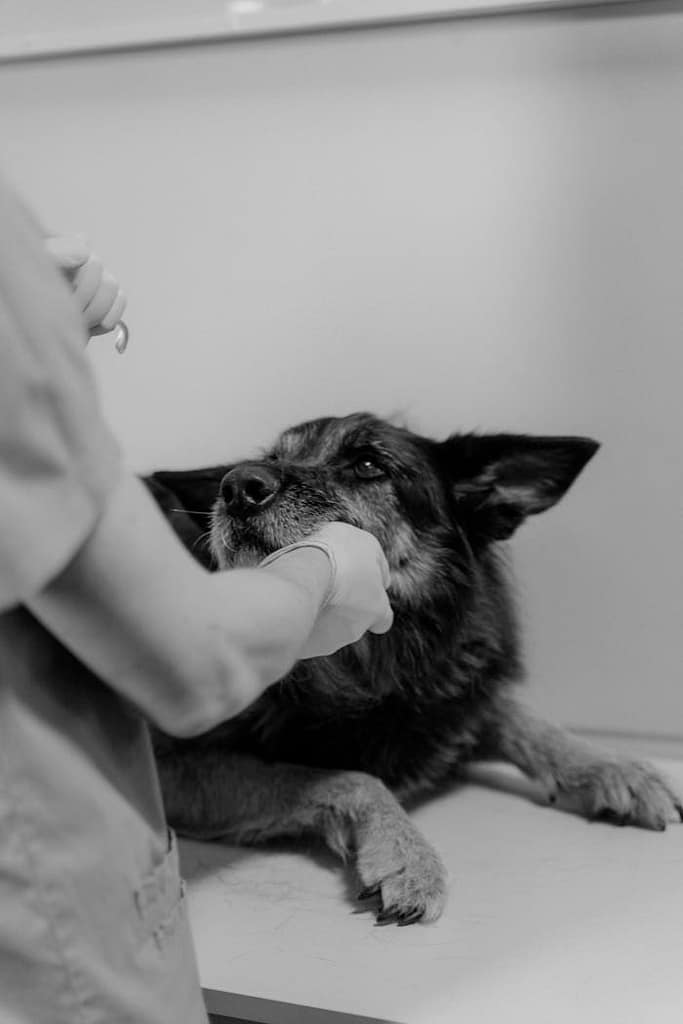
FCE vs IVDD: Understanding the Difference
When your dog suddenly struggles to walk—or loses the ability to walk altogether—it’s one of the most frightening experiences you can face. In those first moments, your mind races with questions. Is it a spinal stroke? Is it a slipped disc? Will they ever walk again?
Two of the most common causes of sudden paralysis in dogs are Fibrocartilaginous Embolism (FCE), often called a canine spinal stroke, and Intervertebral Disc Disease (IVDD).
Although these conditions can appear remarkably similar at first, they are actually very different diseases with different causes, treatments and recovery expectations. Understanding those differences can help you feel more confident during discussions with your veterinarian and better prepared for the recovery journey ahead.
The good news is that many dogs with either condition can enjoy an excellent quality of life, especially when they receive prompt veterinary assessment and appropriate ongoing care.
At FCEtalk, we know that the uncertainty surrounding a diagnosis can feel overwhelming. This guide will help you understand the similarities and differences between FCE and IVDD in clear, practical language while always recognising that your veterinarian is the best person to diagnose and manage your dog’s individual condition.
What Is FCE?
Fibrocartilaginous Embolism (FCE) occurs when a tiny piece of material similar to the centre of an intervertebral disc enters a blood vessel supplying the spinal cord.
This blocks blood flow to part of the spinal cord, depriving nervous tissue of oxygen. The result is a spinal cord infarction, commonly referred to as a spinal stroke.
Unlike a brain stroke, FCE affects movement and sensation rather than consciousness.
Importantly, FCE:
- Usually happens suddenly
- Is not progressive once the event has occurred
- Is not contagious
- Is generally considered a one-time event
- Often improves with rehabilitation and supportive care
What Is IVDD?
Intervertebral Disc Disease (IVDD) occurs when one or more spinal discs degenerate and either slip, bulge or rupture.
These damaged discs press directly on the spinal cord, causing inflammation, pain and disruption of nerve signals.
Depending on the severity, IVDD may:
- Develop gradually over weeks or months
- Occur suddenly
- Cause severe spinal pain
- Continue worsening if compression remains
- Sometimes require emergency surgery
Because IVDD physically compresses the spinal cord, treatment focuses on relieving that pressure.
Similar Symptoms
At first glance, FCE and IVDD can look almost identical.
Both conditions can cause sudden weakness, wobbliness or paralysis, leaving owners understandably confused.
Common symptoms shared by both conditions include:
Sudden difficulty walking
Your dog may stumble, drag their paws or collapse unexpectedly.
Weakness in one or more limbs
Depending on where the spinal cord is affected, weakness may involve:
- One leg
- Two back legs
- One side of the body
- All four limbs (less common)
Loss of coordination
You might notice crossing legs, knuckling over, swaying or an inability to balance.
Difficulty standing
Some dogs remain able to stand briefly while others cannot support themselves at all.
Bladder and bowel changes
Both FCE and IVDD may interfere with bladder function, requiring temporary assistance expressing the bladder.
Reduced reflexes or abnormal reflexes
Veterinarians carefully assess spinal reflexes during neurological examinations to determine where the spinal cord has been affected.
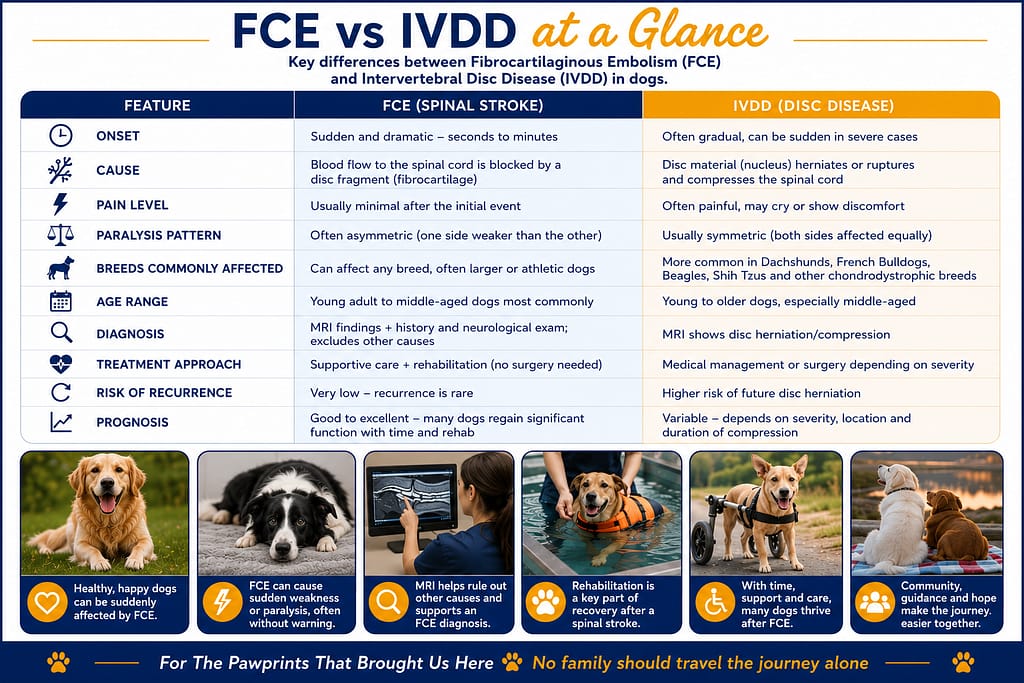
Key Difference
Although the symptoms overlap, several important clues help veterinarians distinguish between FCE and IVDD.
1. Pain
This is often the biggest difference.
FCE
Most dogs experience little or no pain after the initial event.
Some dogs briefly cry out when the spinal stroke occurs but appear comfortable afterwards.
If your dog remains extremely painful hours later, your veterinarian will usually investigate other causes.
IVDD
Pain is one of the hallmark signs.
Dogs with IVDD often:
- Cry when moving
- Tremble
- Guard their back or neck
- Refuse to jump
- Arch their spine
- Become reluctant to move
Persistent spinal pain strongly suggests IVDD rather than FCE.
2. How Symptoms Progress
FCE
Symptoms usually reach their worst within minutes to hours.
After that, they generally stabilise.
Although recovery takes weeks or months, the spinal injury itself does not usually continue worsening.
IVDD
IVDD may continue progressing as disc material compresses the spinal cord.
Without treatment, weakness can worsen significantly.
3. Pattern of Weakness
FCE often produces asymmetrical weakness, meaning one side is noticeably worse than the other.
For example:
- Right leg completely paralysed
- Left leg weak but functional
IVDD more commonly affects both sides similarly, although exceptions certainly occur.
4. Age and Breed
FCE
Often affects:
- Large breeds
- Medium breeds
- Active dogs
- Young adult to middle-aged dogs
IVDD
More commonly affects breeds such as:
- Dachshunds
- French Bulldogs
- Beagles
- Cocker Spaniels
- Shih Tzus
- Pekingese
However, IVDD can occur in almost any breed.
5. Cause
FCE
A blockage of spinal cord blood supply.
IVDD
Physical compression from a damaged spinal disc.
This difference explains why treatments differ so dramatically.
Diagnosis
Because FCE and IVDD can look so similar initially, diagnosis relies on combining several pieces of information rather than a single test.
Your veterinarian may use:
Medical history
They’ll ask questions such as:
- When did symptoms begin?
- Was your dog exercising?
- Did they cry out?
- Has anything changed since it started?
These answers provide valuable clues.
Neurological examination
A neurological exam assesses:
- Reflexes
- Limb strength
- Pain sensation
- Balance
- Coordination
- Muscle tone
This helps localise where the spinal cord has been affected.
MRI
MRI remains the most useful imaging test for distinguishing FCE from IVDD.
It allows veterinary specialists to see:
- Disc compression
- Swelling
- Areas of spinal cord infarction
- Other possible diseases
MRI does not always produce a perfect answer, but it often provides the clearest picture available.
CT Scan
CT scans can sometimes identify disc disease but are generally less useful than MRI for diagnosing FCE.
Blood Tests
Blood tests cannot diagnose FCE or IVDD directly.
Instead, they help rule out infections, inflammatory diseases and other medical conditions.
Treatment Differences
Once the diagnosis becomes clearer, treatment plans begin to diverge.
FCE Treatment
Because there is no disc compressing the spinal cord, surgery is rarely required.
Treatment focuses on:
Nursing care
Excellent nursing care prevents complications while your dog regains strength.
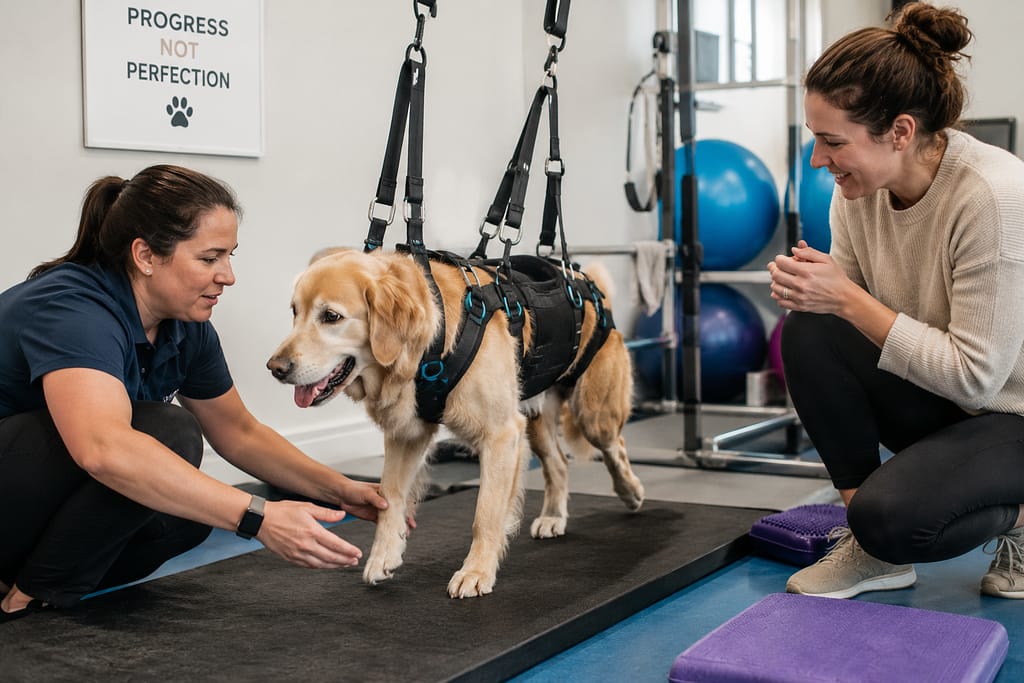
Physical rehabilitation
Rehabilitation forms the cornerstone of recovery and may include:
- Assisted standing
- Range-of-motion exercises
- Weight shifting
- Balance work
- Walking practice
- Hydrotherapy
Bladder management
Some dogs require temporary bladder expression or catheterisation until nerve function improves.
Nutrition
Good nutrition supports healing and helps maintain muscle mass during recovery.
Emotional wellbeing
Recovery is often emotionally challenging for both dogs and families.
Maintaining routines, gentle encouragement and celebrating small improvements all play an important role.
IVDD Treatment
Treatment depends on severity.
Conservative management
For mild cases:
- Strict crate rest
- Pain relief
- Anti-inflammatory medication
- Controlled rehabilitation
Surgery
Severe spinal compression may require emergency decompression surgery.
Earlier surgery often provides the best opportunity for recovery when indicated.
Why Surgery Helps IVDD but Not FCE
This is one of the biggest differences between the two conditions.
In IVDD, surgery removes pressure from the spinal cord.
In FCE, there is no physical pressure to remove.
The injury has already occurred due to interrupted blood flow, so rehabilitation—not surgery—is usually the primary treatment.
Recovery Expectations
This is often the question every family asks first:
Will my dog walk again?
The answer depends on several factors.
Recovery After FCE
Many dogs improve substantially.
Some recover completely.
Others retain mild weakness but enjoy active, happy lives.
Recovery often occurs over:
- Days
- Weeks
- Several months
Improvement is usually gradual rather than sudden.
Progress may seem slow at first before accelerating later.
Recovery After IVDD
Recovery depends on:
- Severity
- Whether surgery is needed
- How quickly treatment begins
- Preservation of deep pain sensation
- Commitment to rehabilitation
Some dogs recover fully.
Others require mobility aids or ongoing management.
Patience Matters
Regardless of diagnosis, nerve healing takes time.
It’s common to experience:
- Good days
- Difficult days
- Small victories
- Temporary setbacks
These ups and downs rarely define the final outcome.
How Your Veterinarian Helps Differentiate Between Them
Veterinary professionals combine multiple observations rather than relying on a single symptom.
They consider:
- Pain levels
- Speed of progression
- Neurological examination
- MRI findings
- Breed predisposition
- Medical history
- Response over the first 24–48 hours
This comprehensive approach provides the most accurate diagnosis possible.
Supporting Your Dog Regardless of Diagnosis
Whether your dog has FCE or IVDD, several principles remain the same.
Focus on:
- Following your veterinarian’s recommendations
- Attending rehabilitation consistently
- Preventing pressure sores
- Maintaining nutrition
- Monitoring bladder function
- Keeping detailed progress notes
- Celebrating every milestone
Recovery rarely follows a straight line.
Your encouragement often becomes one of the most valuable parts of your dog’s rehabilitation journey.
Frequently Asked Questions
Is FCE the same as IVDD?
No. FCE is caused by interrupted blood flow to the spinal cord, while IVDD occurs when a damaged spinal disc compresses the spinal cord. Although they may look similar initially, they require different treatment approaches and have different recovery patterns.
Can a veterinarian diagnose FCE without an MRI?
A veterinarian may strongly suspect FCE based on your dog’s history, neurological examination and clinical signs. However, MRI remains the most effective imaging tool for distinguishing FCE from IVDD and ruling out other spinal cord conditions.
Does FCE hurt?
Most dogs experience little or no ongoing pain after the initial spinal stroke. Some may cry out at the moment the injury occurs, but persistent or severe spinal pain is much more commonly associated with IVDD.
Which condition has a better prognosis?
Both conditions can have excellent outcomes. Many dogs with FCE recover well through rehabilitation, while dogs with IVDD often recover successfully with appropriate medical management or surgery when indicated. Prognosis depends on the severity of the spinal cord injury rather than the diagnosis alone.
Can dogs recover without surgery?
Most dogs with FCE do not require surgery because there is no spinal compression to remove. Mild IVDD cases may also recover with conservative management, while more severe IVDD cases often benefit from surgical decompression.
Can FCE be mistaken for IVDD?
Yes. The early symptoms are often very similar, which is why neurological examinations and advanced imaging are frequently needed to reach the most accurate diagnosis.
Key Takeaways
- FCE and IVDD often appear similar but have very different causes.
- FCE results from interrupted blood flow to the spinal cord, while IVDD involves compression from a damaged spinal disc.
- Ongoing spinal pain is more commonly associated with IVDD than FCE.
- MRI is often the most useful tool for distinguishing between the two conditions.
- FCE treatment focuses on supportive care and rehabilitation rather than surgery.
- Many dogs with either diagnosis can regain mobility and enjoy an excellent quality of life.
- Your veterinarian plays a vital role in confirming the diagnosis and developing the most appropriate treatment plan for your dog’s individual needs.
Final Thoughts
Hearing that your dog may have either FCE or IVDD can feel overwhelming, particularly when the symptoms appear so suddenly. While these conditions share many similarities, understanding their differences can make conversations with your veterinary team far less confusing and help you feel more prepared for the road ahead.
If your dog has been diagnosed with FCE, remember that recovery is often measured in small victories—a stronger step, a tail wag, standing a little longer than yesterday. Those milestones matter. With compassionate veterinary care, dedicated rehabilitation and plenty of patience, many families are amazed by what their dogs achieve over time.
Whatever stage of the journey you’re in today, know this: you are not alone, and every step forward—no matter how small—is worth celebrating.
References
- Dewey CW, da Costa RC. Practical Guide to Canine and Feline Neurology. Wiley-Blackwell.
- Platt SR, Olby NJ. BSAVA Manual of Canine and Feline Neurology.
- Garosi L, McConnell JF, Platt SR. Fibrocartilaginous Embolism in Dogs. Veterinary Clinics of North America: Small Animal Practice.
- Olby NJ, Levine JM, Harris T, et al. Recovery after spinal cord injury in dogs. Journal of Veterinary Internal Medicine.
- American College of Veterinary Surgeons (ACVS). Intervertebral Disc Disease (IVDD) in Dogs.
- Merck Veterinary Manual. Disorders of the Spinal Cord in Dogs and Cats.
Related Articles:
- Bringing Your Dog Home After FCEBring your dog home after FCE with confidence using practical advice on preparation, recovery, equipment, and supporting every step of healing.
- How Vets Diagnose FCE (Fibrocartilaginous Embolism)Understanding how veterinarians diagnose FCE can reduce uncertainty, explain each test, and help you feel more confident throughout your dog’s recovery journey.
- Dog Crates and Playpens for FCE recoveryIf your vet has recommended that they need a safe, cozy space to relax, recovery crates can be helpful in the right circumstance.
- The Best Playpens for FCE recovery in 2026If you’re searching for a dog crate that looks more like beautiful furniture than traditional pet equipment, you’re not alone.
- The Best Dog Crates for FCE recovery in 2026If you’re searching for a dog crate that looks more like beautiful furniture than traditional pet equipment, you’re not alone.
The information on FCEtalk is for educational purposes, uses the assistance of AI and is not a substitute for professional veterinary advice. Always consult your veterinarian about your pet’s health and recovery. Where clearly identified as professional content, it is still intended to support – not replace – your own veterinary team’s care.
Disclosure: Our website contains affiliate links. If you purchase through these links, FCEtalk may earn a small commission at no additional cost to you. This helps support our free educational resources and community.

Learn More About FCE
At FCE talk, we explore everything you need to know about Fibrocartilaginous Embolism (FCE) in dogs,
including symptoms, diagnosis, treatment, and recovery.
Disclaimer: This article is for informational purposes only and reflects general experiences and publicly available veterinary guidance. It does not replace professional veterinary advice, diagnosis, or treatment. Always consult your veterinarian regarding your dog’s condition.
Related Articles:
- FCE in Dogs – FAQs
- FCE Recovery Timeline in Dogs
- Best Exercises for Dogs Recovering from FCE
- How to Care for a Dog with FCE at Home
- Can a Dog Walk Again After a Spinal Stroke?
The information on FCEtalk is for educational purposes and is not a substitute for professional veterinary advice. Always consult your veterinarian about your dog’s health and recovery. Where clearly identified as professional content, it is still intended to support – not replace – your own veterinary team’s care.
Learn More About FCE
At FCE talk, we explore everything you need to know about Fibrocartilaginous Embolism (FCE) in dogs,
including symptoms, diagnosis, treatment, and recovery.